he first time I saw Asia's largest TIFO in person, I was standing in the north stand of Shanghai's Hongkou Stadium, and the sheer scale of it hit me before the noise did. A 6,000-square-meter canvas unfurled across three tiers of seating, painted with a dragon coiled around a football and the year '1995' — the club's founding. The coordination required to pull that off without a single wrinkle is something fans rarely appreciate. It took 1。200 volunteers six hours to hoist it into position, using a system of pulleys and ropes that had been rehearsed for weeks. This wasn't just a display;it was a logistical operation disguised as fandom.Asia's largest TIFO doesn't happen by accident. The design phase alone consumed three months, with a core team of twelve fans working alongside a local printing company that usually handles billboards. They tested fabric weight, ink durability under floodlights, and even wind resistance in a wind tunnel borrowed from a university engineering department. The final material weighed 1.8 tons. On match day。
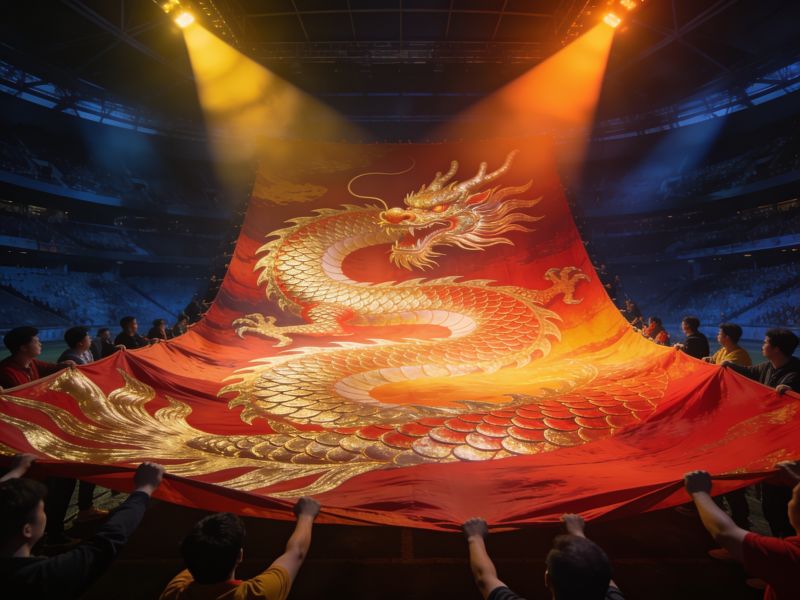
the biggest risk wasn't a tear — it was the rain. A light drizzle would have made the canvas too heavy to lift, so the group had backup tarps and a meteorologist on speed dial. That level of planning separates a memorable TIFO from a failed one.What struck me most was the quiet discipline among the volunteers. No one was shouting orders. Each section had a leader with a whistle, and the sequence — left to right, bottom to top — was printed on laminated cards distributed days earlier. When the TIFO finally rose, it covered the entire south goal and spilled into the corners, and for a few seconds the stadium fell silent. Then the roar. I've covered football across Asia, and I've never seen a crowd so unified in awe. The club later estimated that 40。000 fans stayed an extra 15 minutes after the final whistle just to watch the TIFO being folded — a kind of reverse celebration.Does size alone make it Asia's largest TIFO?Not quite. The title has been contested by groups in Japan and South Korea, but the Shanghai display holds the record for total painted area and volunteer participation. A close competitor in Ulsan used a digital projection instead of fabric。which some purists dismiss as a different category altogether. The real legacy, though, isn't the record. It's the template. Three other Chinese clubs have since reached out to the Shanghai group for advice, and a documentary about the TIFO's creation is now in post-production. That kind of influence doesn't show up in any official measurement.
Would I call it art?Maybe. It's ephemeral, collaborative, and completely dependent on the crowd's willingness to participate. Unlike a banner in a museum, a TIFO exists only for the minutes it's held aloft. Then it's folded, stored, and largely forgotten. But ask anyone who was in that stand, and they'll tell you: for those 90 seconds。Asia's largest TIFO made the stadium feel like a single living thing. That's not something you can engineer — you can only organize for it.